“Change is the only constant in life”

It’s been 3 years since my last post… Wooow ! So many things happened. I needed to come back here and share because I have so many things to say. 

“Change is the only constant in life” said a greek philosopher. 

From “what if fashion could be more than just being trendy” to “what if the diaspora has a role to play in Africa”. Always on my journey to find a meaning behind everything, I decided to share a broader perception of the world through what I see, witness and experience. 

Calling my blog “what if fashion was more than just being trendy” was all about using fashion as a tool to showcase different narratives of the continent as well as as developing African economy by creating a sustainable industry that will be able to create employment etc…

“I am not African because I was born in Africa but because Africa was born in me.”

Kwame Nkrumah

I always felt like I had a role to play in Africa even if I was not born there but in France. As Kwame Nkrumah said, “I am not African because I was born in Africa but because Africa was born in me.” I know a lot of people around me that ask the same question “Are we, as the diaspora, legitimate to see ourselves as part of the solution for the development in Africa ?” (we will talk about that in another post.) 

If you go back to my first post, here, my journey started in 2016, at the age of 23, when I had my first job in West Africa, first time working in Africa. In reality, my journey did not start at that time. In fact, it started way before, at the age of 11. 

Let’s dig a little bit deeper so you can better understand why at that particular age. 

” We were very young, white, black, brown and did not care, for us we were just french…”

There are two particular triggers in my life. The first one being my parents sending me to a private catholic boarding school. It was for me a massive change. My environment completely changed. Before that, I used to live in an environment where colors and ethnic background did not matter at all. I never heard about such question as “where are you from ?” We were very young, white, black, brown and did not care, for us we were just french with different culture at home; “la France black blanc beur”. So from that environment, I ended in a boarding school where I became a “minority”.

In France, it is not appreciated to talk about communities. However, I have to talk about this. Something, naturally happened without any explanation. As minority, we started to form a “clique”, a group. All boarders student, from different age, at diner, we started reunited together. We used to be called “la table des Noirs.,” the black table. I know it can sounds negative but for us it was not. We loved being different and being together at the end of the day. We shared things and stories that only us could understand. The funny thing is that, we were all coming from different backgrounds. Some of us were born in Africa, coming from the elite, some of us like myself, grew up in the suburb of Paris and coming from the first generation of immigrants.

It was so interested for me to know more about Africa by being with them. It was like being closer to myself, my identity. I started to get more interested about Africa, its lifestyles and economy. I felt like I had to “return one day” (I know it’s not really returning since I never been there at that time).

“I HAVE A DREAM…”

Martin Luther King
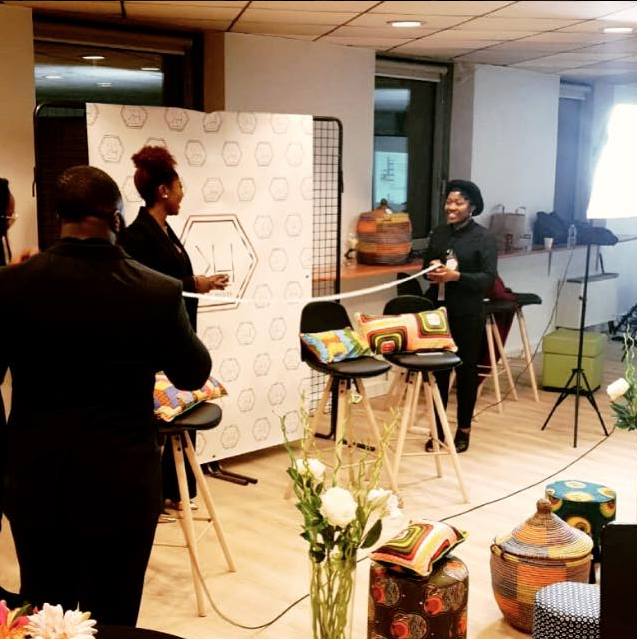
The second trigger, was like Martin Luther King, “I have a dream,” at the age of 12. In my dream, my grandfather were passing on me an heritage. To know more about that dream, you can hear my story on the SETANAL podcast (sorry for english speakers.) This dream, is basically the start of my calling, the start of the “first” business (the very first attempt was when I was 18) I launched recently, Kazi House, the first coworking and creative space and hub that gather the African diaspora as well as creating a bridge with entrepreneurs in the continent. Our mission is to make entrepreneurship and investment easier in Africa through the diaspora. We believe that “more than a family, we are ONE”. It is together that we will be able to make it !  

Why did I start with a blog talking about fashion ? Simply, because I’ve always loved the fashion industry. I’ve never been a fashionista but I always been intrigued by fabrics, techniques etc… For me, fashion was a tool for power. I’ve always felt like I had the responsibility to use my money wisely, by buying from African designers because “your wallet is power”. Where you decide to use your money, it is where you decide to give power to ! 

Now, my world is not only about fashion, after working with small companies and organizations which the common link was using fashion as a tool to create a social, environmental and economic impact in Africa. From working in events, marketing, press relations and operating as a consultant for African garment factories in West Africa. My world has now change or evolve with the recent launch of my company, Kazi House. My world is all about inspiring the diaspora to “return” by creating businesses and/or invest in Africa. 

What you are today, is the sum of the actions you made in the past. So if you follow my story, you understand that everything I do and represent today, is basically my story, being myself ! The story of a young female with an entrepreneur spirit in between Africa and the diaspora. Creating that bridge is for me essential, necessary ! It’s like connecting dots of my identity. 
The Day KENZO Turned Black

KENZO x FallAspire

I’m about to say something very cliché ! My background being from DRC Congo, fashion has always been very important in my family and community. My father will buy very weird and expensive shoes for me, that were actually very uncomfortable and maybe too original for me, so I will only wear them when he is around otherwise I will let them in their boxes.

KENZO has always been that very colorful and outstanding brand. I’ve always liked that about KENZO and I guess that is why many congolese people like it (because we like to be fashionably different).

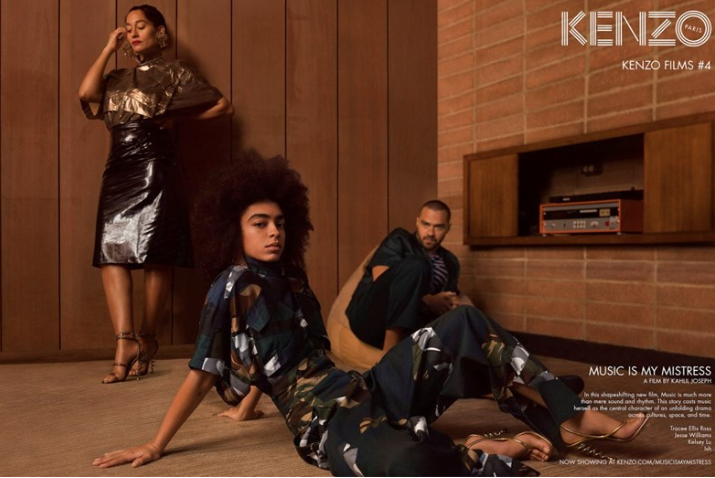
Kenzo x Music Is My Mistress

#KENZO #BlackCulture #MusicIsMyMistress

Since the beginning of this year I noticed that KENZO was doing many campaigns showcasing black models. It has recently released a music video celebrating the black culture in The USA. A short film titled ‘Music is my mistress » which is a 12 minutes video celebrating fashion, music and sensibility. Here, the brand aims to send a message about respecting the black culture. The music video has been produced by the artist behind Beyonce’s Lemonade music videos. I actually loved the music videos, how black and african culture have been well represented in this video where you could see many images referring to the black community in the states as well as showcasing african artists and designers. In this video starring Jesse Williams and Tracy Ellis Ross, Tracy played a woman described as « African royalty ».

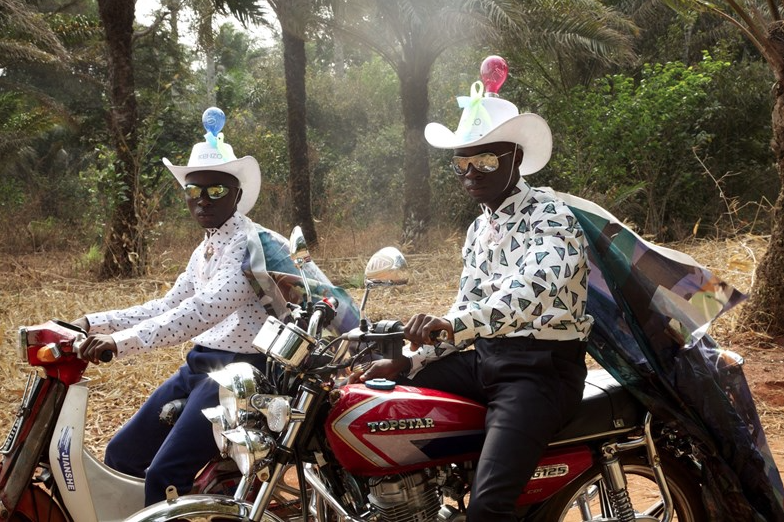
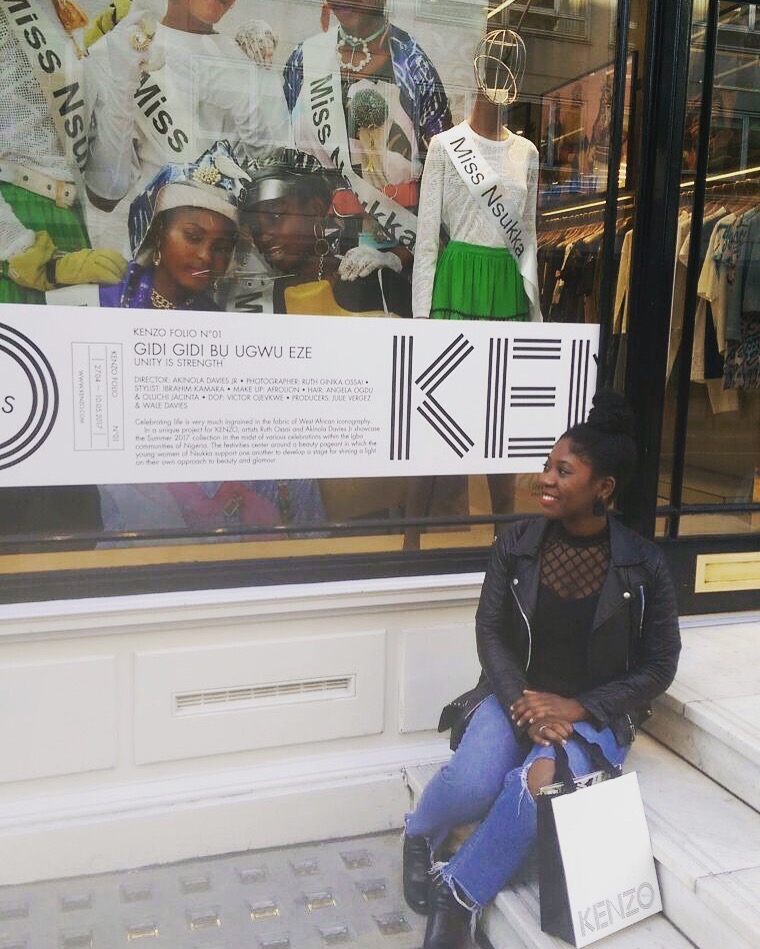
Now with it’s latest collaboration exhibited in the London flagship store, this time the brand went in Africa and collaborates with Nigerian artists on an unique project about unity and beauty. The exhibition is called « Gidi Gidi Bu Ugwu Eze,» an Igbo proverb which means « Unity is strength. »

KENZO x FallAspire

Kenzo Flagship Store London

From the window of the flagship store a huge photo of Igbo girls was displayed so as soon as I arrived I was very excited about going inside and see more. These Igbo girls are precisely from Nsukka, a town located in South-East Nigeria in Enugu State.

The Igbo are the second largest group of people living in southern Nigeria and Nsukka, home to Igbo, is one of the largest places in Nigeria. The first time I heard about Nsukka was in Chimamanda Ngozi Adichie’s book called Americanah. So, by looking at these Igbo girls from Nsukka, it felt like I was still in the book (by the way Lupita Nyong’o will reunite with Brad Pitt to bring the book Americanah to the screen. We can’t wait for that to happen.)

With that project the goal of Kenzo was still to celebrate black culture but in this one more specifically the key message was to challenge « normative beauty » and visualize beauty as something unique and different as mainstream in medias and magazines.

When KENZO approaches the nigerian artist Akinola Davies Jr, it was because of his previous work on music videos (Kenzo like to mix fashion and music in an unique perspective to send a powerful message). Partnering with Ruth Ossai in that project they chose to shoot young people of the Igbo community in Nigeria. The models were all locals from the schools, churches and markets of Nsukka, Ossai’s own village.

“It’s about celebrating young black Nigerian bodies and capturing them celebrating Igbo culture and traditions, showing that beauty is always present when there is a commitment to the celebration of culture,” explained Davies Jr.

That is true that beauty plays a big places in African celebrations. We all see how spectacular can be african celebrations, wedding etc.. As a congolese I can tell you that in our community when you know you have a celebration coming you better be on point, make up, clothing, hairstyles everything. It is almost like a statement, it is a lot about showing off but in a good way. I actually found myself not always in line with that vision, because I will call myself a natural beauty. Most of the time I enjoy keeping my natural afro and my face with no make up or barely. When I went for the first time in DRC Congo, Kinshasa I had a lot of bad comments because for them keeping your natural afro is being messy and seen as neglective so it was a bit hard for me because I did not correspond to their view of beauty.

Anyway, back to Kenzo. Each Kenzo’s music videos or short films are more here to send a powerful message than to showcase a fashion collection and that is what I really like about it.

My motto is « What if fashion could be more than just being trendy » and here is a good example. They use fashion to send messages to people. “It’s our fourth film, and they’ve never been fashion films. I would say each director that made each of the films would say they’re a part of the body of their work and that’s important.”

In the “Gidi Gidi Bu Ugwu Eze” exhibition, Akinola and Ruth main messages are Unity and Beauty, that we can see through a beauty pageant, Miss Nsukka, the different celebrations, and … Love. I say love because when watching the video and photos, two photos really captivated my attention. (See pictures below). I feel like they also wanted to showcase unity not only as everyone enjoying being together but as well as being unify in our differences by capturing two images representing « gay marriage. », which could have been controversial since homosexuality is still a tough subject in Africa.

Capture d_écran 2017-05-23 à 20.43.53

Gidi Gidi BU Ugwu Eze #KENZOxNIGERIA

I like the fact that more well known brands are embracing the african lifestyle and supporting african artists and designers through different projects.

Let’s give a voice to African talents they have so much to show and share with the world and let’s show to the next generation that there is no just one definition of beauty but a tons!

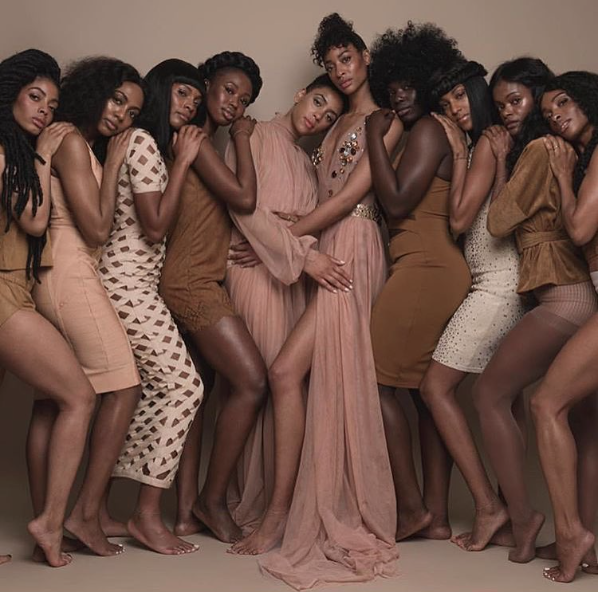
Sizing, the major problem in Africa ready-to-wear!

Melanin Beauties.png

For me this topic is extremely important!

I constantly hear people saying that they do not want to purchase African ready-to-wear as the sizing is never accurate. People complain and say ‘’I would rather go to a tailor, so the fit is perfect!’’(why don’t you do that instead of going to H&M as well ?!)

It is no lie that there is a huge sizing problem within African ready-to-wear. Research findings in Africa indicate that contemporary apparel sizing is inadequate in providing African women with an acceptable quality of fit.

I think the major problem is that ready-to-wear apparel is designed to fit women in the Western ideal body shape, and there is no fit curve and size chart available that correspond to Africans or even regions in Africa as western has for EU, Fr or the UK. An apparel sizing system consists of a series of size charts, with each size chart designed to serve the apparel sizing requirements of each body shape category found within the population. Thus, it is important that we have more studies about the different shapes existing in our countries so we can have our own size chart too!

Apparel sizing systems guide apparel manufacturers in terms of the sizing and proportioning of ready-to-wear apparel, with the aim of providing the majority of consumers whose precise body measurements are not known, as well as a well-fitted garment which in actual fact is not made to fit perfectly. If made perfectly being named ‘’ready-to-wear’’ would not be appropriate, however ‘’Made-to-measure’’ would. This is why I often tell people to be more tolerant.

AfricanFactory

Moreover, Africa consists of a lot of self-educated individuals.

Most of the sewers learn and gain their knowledge of sewing in the streets, this is merely because there are no institutions or fashion schools available, and if there are, most of them are design schools which isn’t really as beneficial. In my opinion, we have a heap of designers which is great but we need more fashion engineers in order to build a sustainable industry. Fashion would only be a driver of the economy if we have a real industry. If we have more schools that teach people how to make patterns or use software programs like Gerber or Lectra we won’t only create a sustainable industry but also value a job which is low-rated today in Africa and create a massive amount jobs.

Today, sewers need to understand that their ingenuity and their natural gift is not enough in order to build a profitable industry.

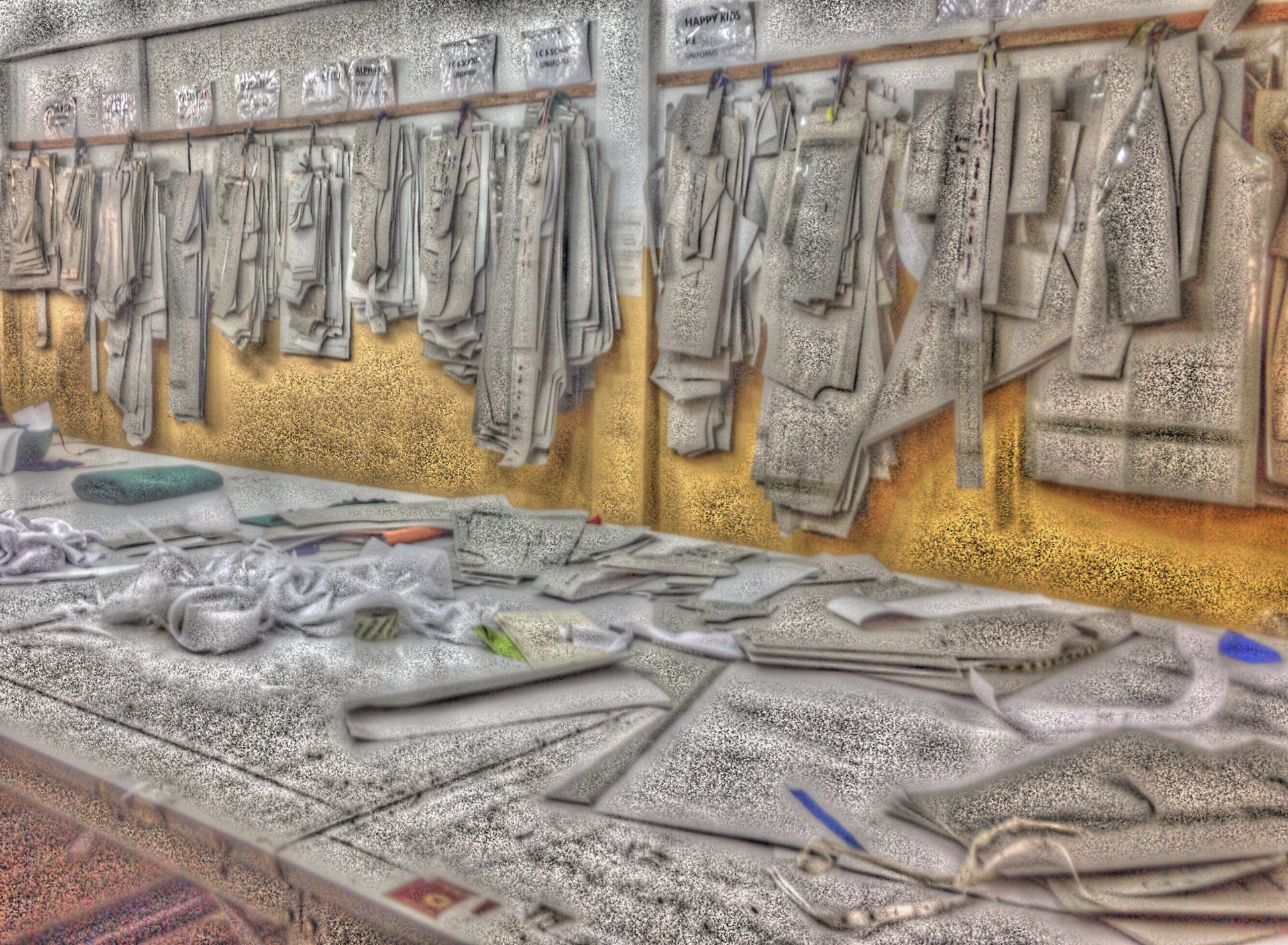
I want to share with you a small anecdote of when I was working in a factory in Benin. My company role was to provide support in West Africa to become a factory align with international and ethical standards and become profitable. So, we had to work with them, understand how they work and how we can implement international production standards. One of them was to teach the pattern maker the importance of making a paper pattern instead of drawing patterns directly onto the fabric. That was a big deal, because by doing that we would allow the factory to work like a real one and therefore be productive and profitable in the long-term. However, the pattern maker disagreed because he was used to creating his patterns that way and could not understand why he had to change his method. He then came to the conclusion of leaving the company as it was too much of a change for him and he was not willing to learn.

Here is the problem, we cannot want and deem African fashion as the driver of the economy if we ourselves do not generate real schools and value all types of jobs involved within this.

Thus, let’s not neglect our designers and ready-to-wear brands, they are doing only what they are able to do with what they have and it is a big challenge. We should be more tolerant and united. The more customers they have the greater their space and place of work would then be which will then allow the government to be supportive. Just look at Ethiopia, because the government is supporting the fashion industry, the demand is increasing and the industry is profitable as well.

Africa fashion is not just these great and amazing catwalks and fashion weeks in the big cities of Africa. Africa fashion represents hands, workers etc.. who make everything possible with what they are given and need more resources to become even better and greater than where they are now.

African Fashion IS NOT JUST WAX !


Fallaspire in Osei Duro Dress

Fallaspire in Osei Duro Dress

What is for you African fashion? Is it wax? Is it “African print” fabric? Is it colorful clothes?

I love asking that question to people around me and I love hearing the answers.

I have created 2 months ago a WhatsApp group in order to exchange opinions and feelings about topics like “What is African Fashion”, “African designers vs Street tailors”, “The evolution of the industry in Africa” and more… (ps: if you want to be part of the group just write a comment below.)

So, regarding that question, I had interesting answers. Most of them were exactly what I expected:

  • African fashion is everything with wax fabric;
  • traditional clothes revised so it can be more modern;
  • is referred as bright colors;
  • etc…


Fallaspire-Woen Ilga

Fallaspire in Woen Ilga Dress

There is no good or bad answers to it, but I’d like to share my opinions about the term “African fashion”. For me, it’s not limited to the color or the wax, it has to be made in Africa and/or by the African diaspora (which is why it is not just wax, many will understand what I mean ;I .) It has to be inspired by the great culture and traditions you can find in many different part of the continent (I’m talking techniques) and IT HAS TO EMPOWER IN A WAY OR ANOTHER THE CONTINENT.

You can use batik cotton fabric made in Ghana for instance, or even be a french designer originated from Côte d’Ivoire and it will still be “African Fashion” for me.

We talk about “Western style” so why not value “African style” which is as rich and varied as the Western one.

Sorry if I may sound too activist but I put value in supporting and empowering my community.
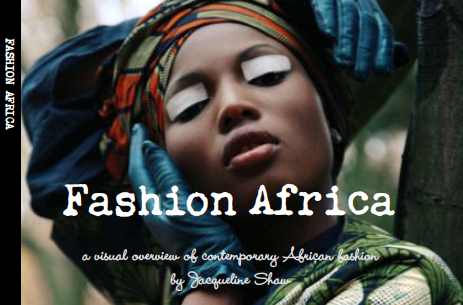
There is this an amazing book called Fashion Africa written by the blogger Jacqueline Shaw who profiles the most African designers who are making long-lasting changes to the communities around them. All the featured designers are either born in Africa or produce and source in Africa. They are displayed with beautiful photographs and artwork as well as revealing interviews. So guys, go buy it, it’s awesome 😉 !

Ps: If you disagree with what I say, it is fine, I’d love to hear your opinions as well !

Jacqueline-Shaw-e1324640507552-2

‘Fashion Africa’ by Jacqueline Shaw

Travel in West Africa aka The Nightmare

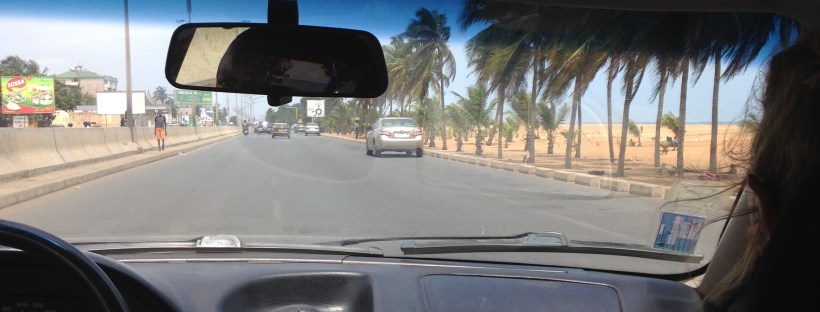
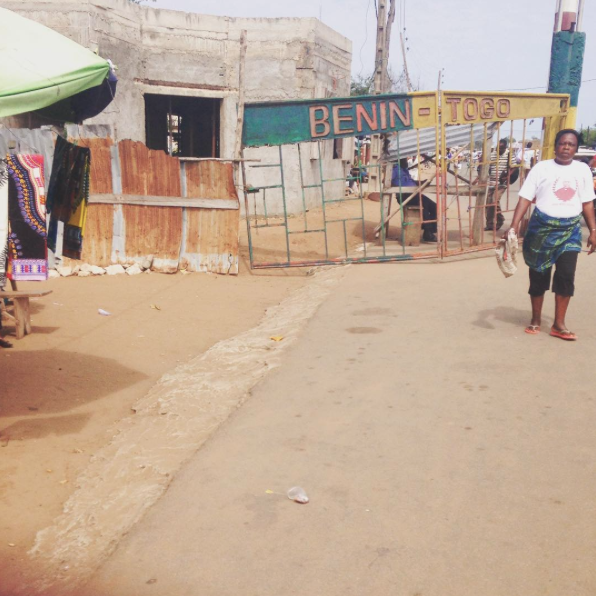
Togo-Benin


When I arrived in Ghana my company told me that I will be travelling quite often between Benin (where I am mostly based) and Ghana (where most of my colleagues are and work). So, I was so excited about it, until I realized that we will do it by land. I can hear you wondering why not by air? Well… when you see the flight tickets prices within Africa woooow that is super expensive. It is cheaper to fly from Africa to Europe than between African countries, that’s ridiculous right ?!

Anyway, after my first land trip from Accra to Cotonou which is about 7 hours, I am now used to it and even customs in boarders know me well.

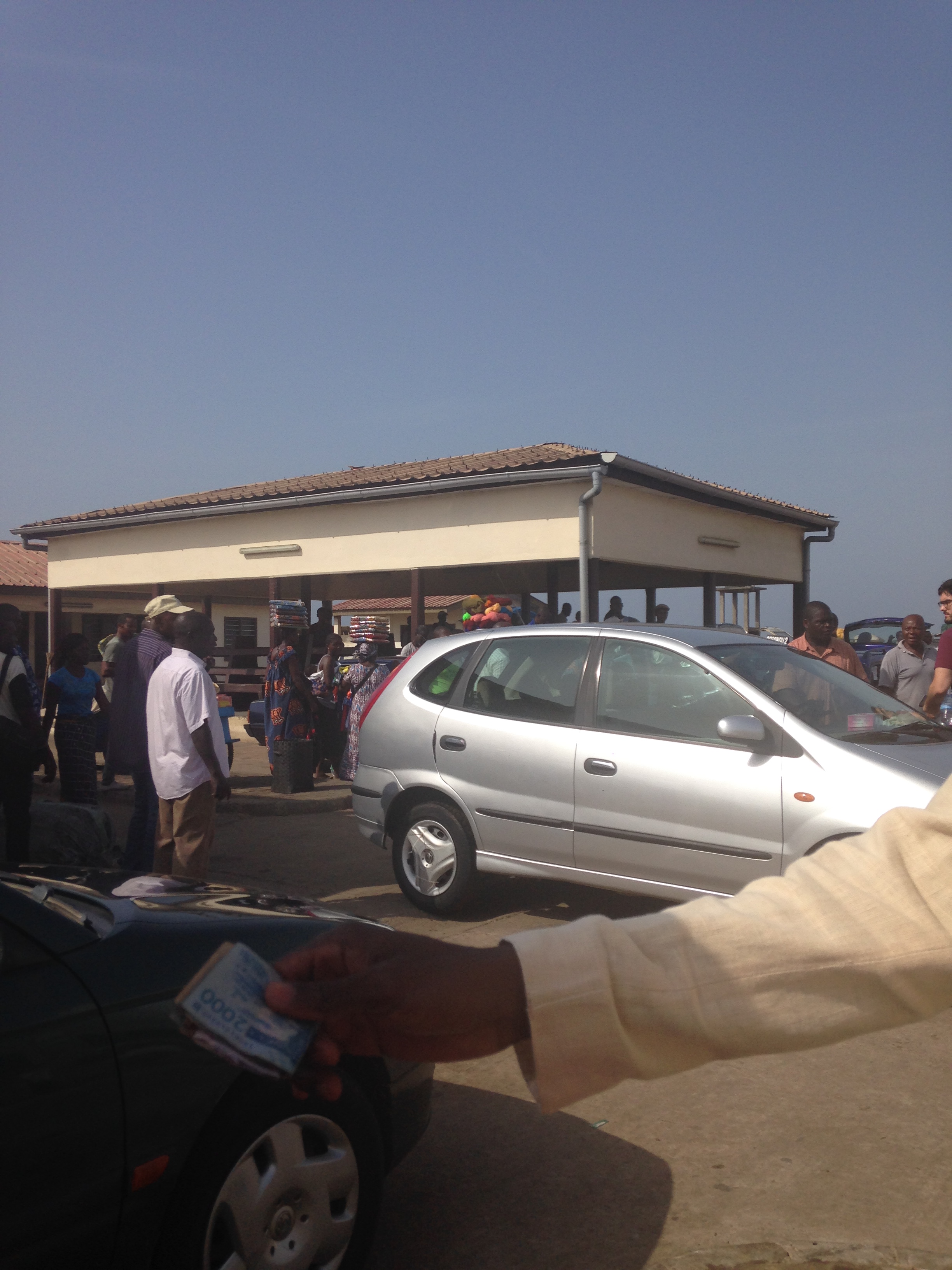
Now, let’s talk about how this journey looks like. Horrible, awful, exasperating. From Accra to Aflao, the border between Ghana and Togo, our car is almost stopped 4 to 5 times by police officers who most of the time want to find any excuses to bribe you a bit or even flirt with you (yes, I know it sounds crazy but it happened to me). Then, when arriving at Aflao, in the no man’s land you have a bunch of people coming to you, to carry your bag, to sell you local sim card, to change your money (ghana cedis to CFA,) to sell you african print fabric etc.. Let’s say the no man’s land is like a shopping market.

Now, it is time to pass all the administrations, worst part. It literally takes ages, but it never take the same time. Some days it can be a very long process (about an hour ) and another day you can be lucky  and pass the border in 20mn. As a young women I find passing the border very interesting. Wether soldiers, customs, policeman will want to flirt with you, or sometimes I feel like it is written in my head ‘I am a foreigner’ so, “undeclared customs ” will just stop me all the time. I hate them so much, they are just random people that seat at the border and will pretend to be customs so they can “check” your bag and ask for gifts if some things interest them.

The journey is long and stressful. I won’t event talk about how local are sometimes treats at the border. Everything is unofficial, it depends of the mood of the officer wether he will charge you more or almost nothing.

Despite to be stressful this trip still a good experience and I am now a visa expert!

In any cases, I realized that my smile is my biggest weapon, trust me.


Border

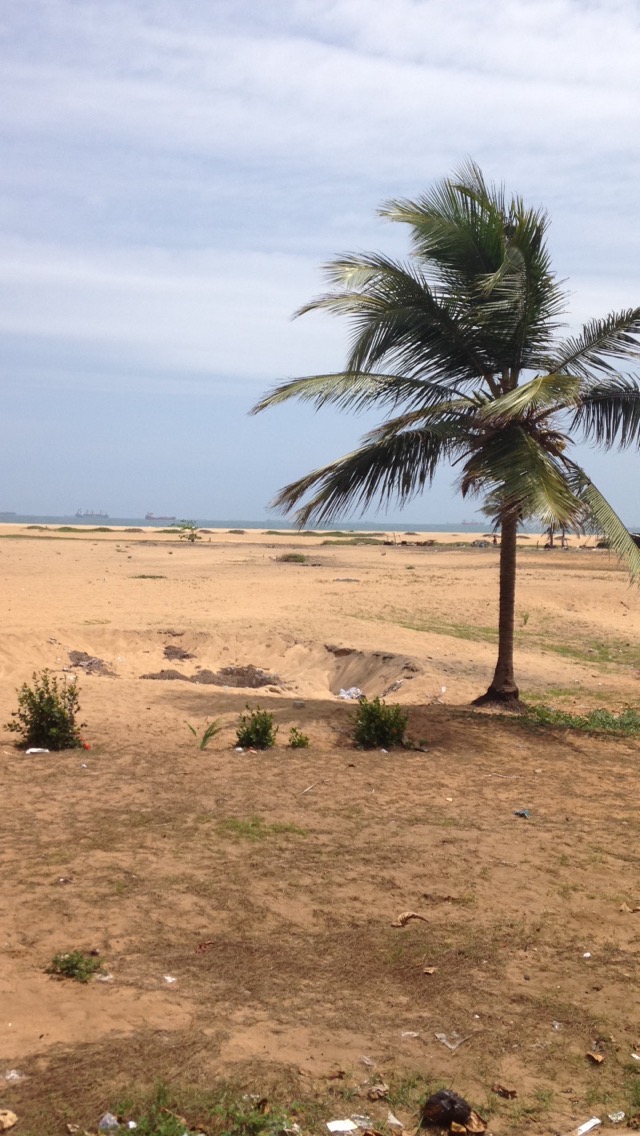
Lomé Beach

The not so shiny and rising Africa


I recently watched an interview of Chimamanda Adichie and one thing she said just rang true to me, as it was the first time I understood what she was saying. She said “It can be problematic to do this all Africa rising, everything shining now because it isn’t the truth…”

“It can be problematic to do this all Africa rising, everything shining now because it isn’t the truth…” Chimamanda  Ngozi Adichie, a Nigerian novelist.

I am what can be called an “Afrop-Optimism” for people who knows me well. I found a good definition about it. Afrop-optimism is a state of absolute conviction that a bright future lies ahead for the African continent, and that we (the sons and daughters of the continent) will be the crafters of such a future. 


FallAspire-Ayélawadjé

So for those who just discovered my blog I want to warn you that I won’t only portray this rising and bright future that I see for Africa (even if I’m so obsessed with that) but I will tell my story, my experiences as it is.

Africa is rich, bright. It gives an energy and a vibe that I can’t always describe. For me it feels like a  boyfriend/husband. As much as I love him and I want the best for him, he can be so annoying and exasperating, but I just love him.

I hope my blog can be helpful for this new generation from Europe etc.. who wants to “come back” and live, and be a part of our rising and beautiful continent (even if some of us never really went there, just born and raised outside Africa) .


No more ads in Cotonou: The Presidential Race

These past 2 weeks I have experienced my first presidential campaign in Benin. I think it’s very exciting. Some Beninese I’ve met told me that it is the most exciting and tense election they’ve experienced. I’m sure you all know that Benin is known to be a safe place and a pretty good democracy in Africa. The actual president wanted to change the constitution but he eventually gave up.

Well, even if the elections are tense, each candidate’s campaign is very entertaining and joyful. I’ve seen different vans almost everyday going around the city, in Cotonou with loud music, people dancing and shouting the glory of their chosen candidate, football tournament etc…
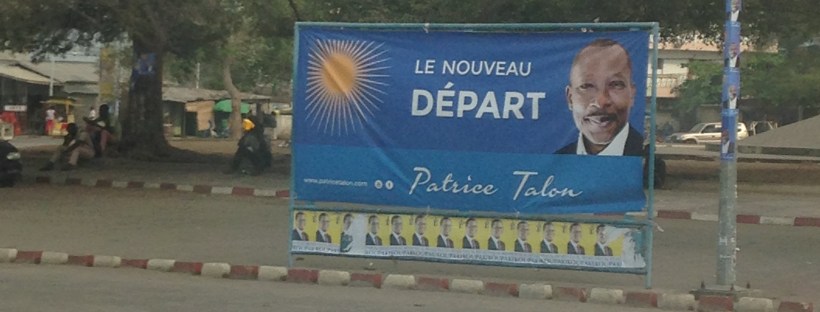
So one day, on my way from home to work, I started counting  posters of candidates that I’ll see and well… It was not that easy to do. There are no more commercial billboards in Cotonou. Bye bye beer or telecommunication adds, and hello to the candidates.
I’ve also spent a day with the “Young Ajavon Team”,  they are young, full of hope, and determined to be heard. Some are worried about the elections and fear corruption. Most of the Beninese I’ve spoken to told me that it could be anybody but not Zinsou and I asked why? Is it because he is half french? or because he once said that Africa belongs to Europe? And they would tell me because « We want someone that understand us and would be able to defend us!”
The race started ABT, Ajavon, Talon and Zinsou are the favorites among the 33 candidates.  Let see if the Beninese voice is louder than corruption.. oops !

Don’t wait… Create your own path!


“I don’t believe in luck… For me luck is preparation meeting opportunities.” Oprah Winfrey

5 years ago, I was applying for a BBA at a French Business School and they asked me “Where do you see yourself in 5 years?” and I replied that I see myself working actively for my continent Africa, doing my part for its economic growth.

Here I am, February 17th, 2016 creating my blog from my room in Cotonou, Benin, where I am working for Ethical Apparel Africa (EAA) and travelling back and forth between Benin and Ghana. I still haven’t done 100% but guess what, it is okay I know I’m gonna get there!

I have wanted to be there and now I am. But beyond the dream, actions need to be done! By working with such an hard worker women Jacqueline Shaw for Africa Fashion Guide, I had the opportunity to be involve in discussions with those people who wants to make a change in Africa. By working with such a great and inspiring men Chid Liberty, who founded the first Fair Trade certified apparel factory in Africa, I had the opportunity to assist at the birth of an amazing brand, UNIFORM that I’ll talk about in my future posts.

I’ve never wait on people to come and get me, I just knock on people’s door, connecting via social media, make spontaneous applications. I believe that sometimes it is better to wave at a person so that he knows you here than just wait for him to see you, that’s just my opinion.

So, get out of your comfort zone, don’t wait for luck to knock at your door, just create your own opportunities, your own dreams, your own path!